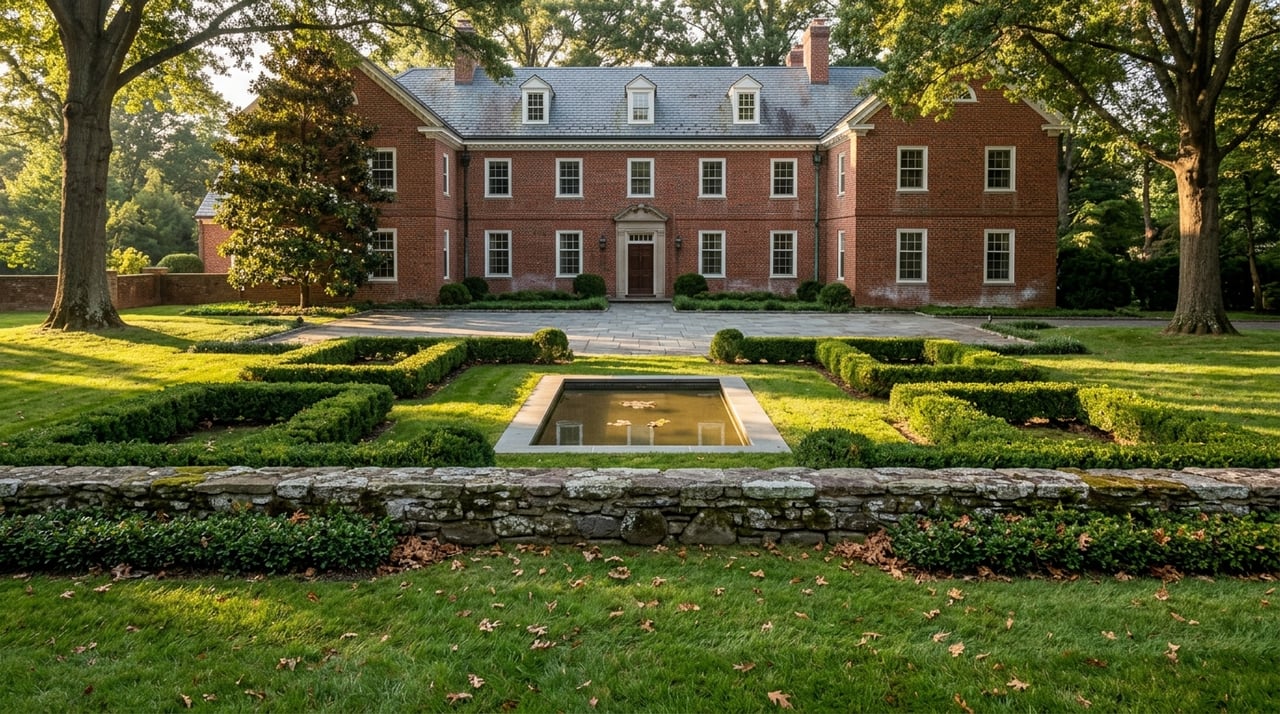
What does it actually mean when a metro area cracks a national luxury housing ranking? Most people assume it means the market got more expensive. In Atlanta's case, right now, that assumption gets the mechanism backward.
The Summer 2026 Wall Street Journal and Realtor.com Luxury Housing Market Ranking placed the Atlanta-Sandy Springs-Roswell metro at No. 9 nationally, up from No. 11, its first appearance in the Top 10. Read the underlying components of that ranking, though, and the story flips. Atlanta made the list not because its luxury threshold climbed to match the other nine markets, but because it didn't. At roughly $990,000, the 90th-percentile luxury listing threshold here is the lowest of any market in that Top 10 group. Atlanta is also the largest metro by population among the ten, at around 6.5 million residents, with a 3.4% unemployment rate, second lowest in the group.
Put plainly: Atlanta earned a luxury ranking by being the cheapest door into the luxury tier among cities that already have one. If you're moving from New York, California, or South Florida with a budget built around what "luxury" costs there, that gap between perception and reality is the whole story.
The friction you'll hit before you understand why
Here's where the theory turns into a practical problem. A fifth of the top home sales in Buckhead during the first half of 2026, 20.7% by one local count of deed-recorded transactions, never appeared on a public listing at all. That figure is described as conservative, since late-recorded deeds tend to push it higher as the year closes out.
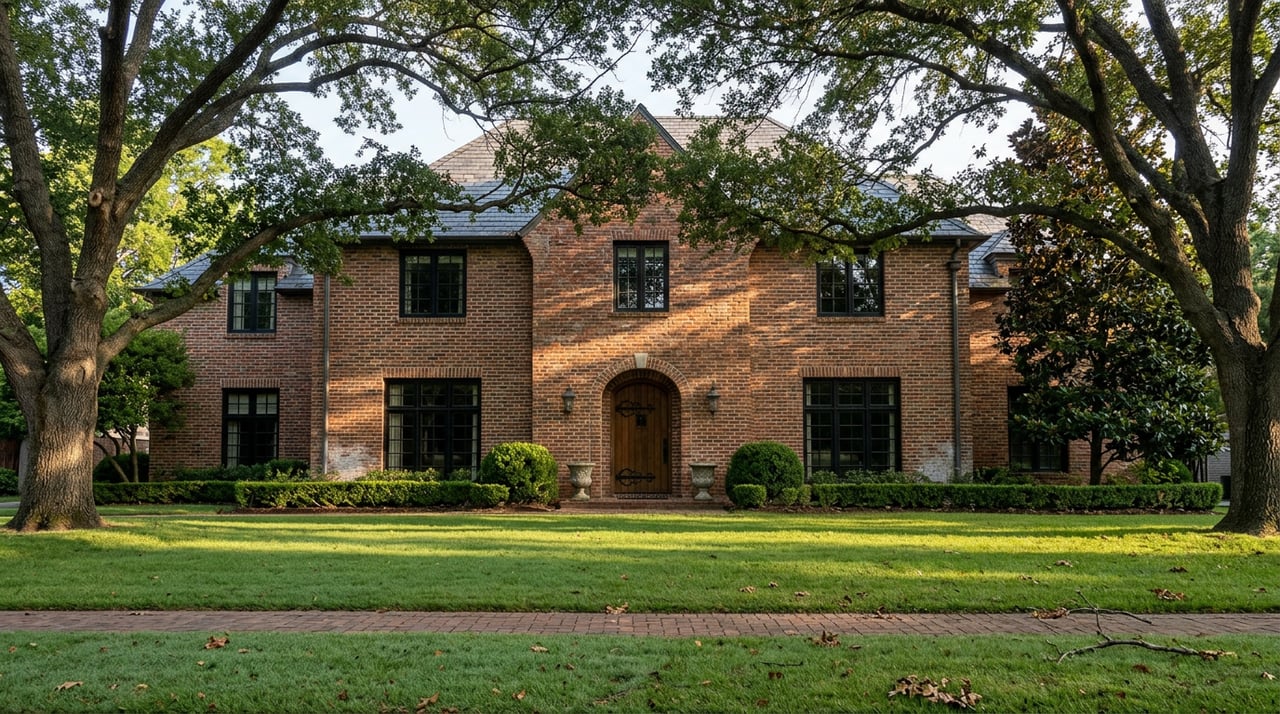
Some examples make the pattern concrete. A property on Paces Ferry Road NW closed for $8,250,000 in the first half of 2026 without a matching MLS listing. A 1949 estate on Valley Road NW sold off-market in March for $7,260,000, buyer and seller matched quietly, no sign in the yard. A separate estate on one of Tuxedo Park's signature lanes closed in February for $7,500,000 without a single day on the MLS. One of the stranger closings involved a parcel on Stella Drive that the county still had typed as vacant land when a June deed recorded a $6,350,000 sale, a fully finished new-construction home that never listed publicly at all.
Meanwhile, some of the highest-profile sales did happen in public. A nearly seven-acre gated compound on Northside Drive, complete with a private lake, dock, and two guest homes, sold for $9,292,500 through a standard listing process.
The point isn't that off-market deals are common or rare. It's that a relocating buyer running searches on public sites is working from a dataset that is missing roughly a fifth of the top of the market by design, not by accident. If you're comparing what you see online to what a $990,000 threshold implies, you're already behind before you've toured a single house.
Why the top of the market is behaving differently than the rest of it
The off-market share isn't happening in isolation. It's a symptom of a market that has split into two distinct behaviors, a pattern FMLS Chief Economist Leslie Appleton-Young has been calling a K-shaped market. One leg of that K is straightforward and matches the national headlines about buyer leverage returning. Georgia MLS's 12-county snapshot for July 2026 described the broader metro as continuing its shift into buyer's territory, with active inventory rising and the pace of sales slowing as buyers take more time to evaluate price and value before committing. Across Metro Atlanta, closed sales were down 24% year over year in an early August 2026 update, following a 22% decline the month before. A closer look at the Centennial High School submarket, which spans parts of Alpharetta, Roswell, and Johns Creek, found that 47% of active listings had already taken a price reduction.
The other leg of the K is moving the opposite direction. FMLS data shows sales of homes priced above $1 million rose 14.1% year over year, even as the broader market cooled. That's the leg that pulled Atlanta into the national luxury ranking, and it's also the leg where the off-market activity concentrates. When demand at the top of the market outpaces what's publicly listed, sellers with real equity don't need broad exposure to move a property. They need the right buyer, and increasingly that match happens before a listing photo ever gets taken.
Here's the split in plain terms:
| Broader Atlanta market | Luxury segment ($1M+) | |
|---|---|---|
| Year-over-year direction | Metro-wide closed sales down roughly 24% (early Aug. 2026) | FMLS-tracked $1M+ sales up 14.1% YoY |
| Pricing behavior | 47% of active listings in the Centennial HS submarket (Alpharetta/Roswell/Johns Creek) show a price cut | National luxury ranking climbed from No. 11 to No. 9 |
| What it means for you | More negotiating room, more inventory, more time | Less public inventory, faster off-market matching |
If your search strategy assumes the same conditions apply across every price point, you'll misread both halves of this table.
What the threshold actually buys, and where it splits again
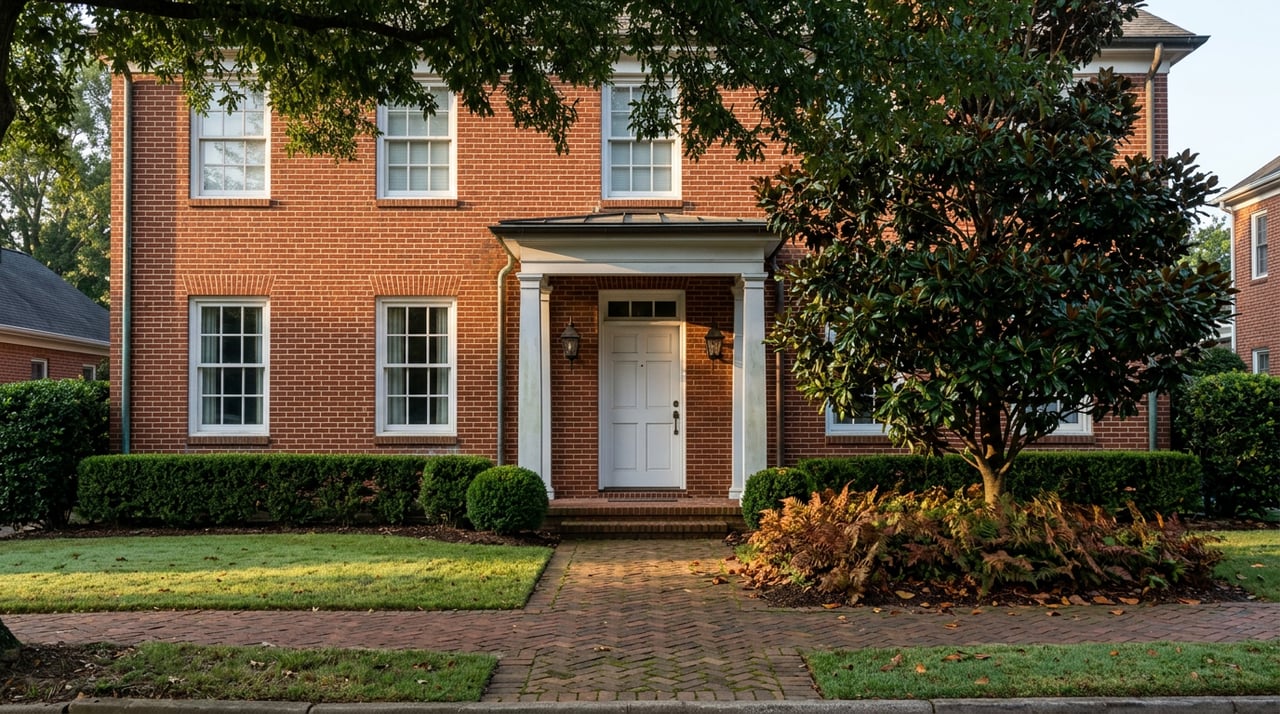
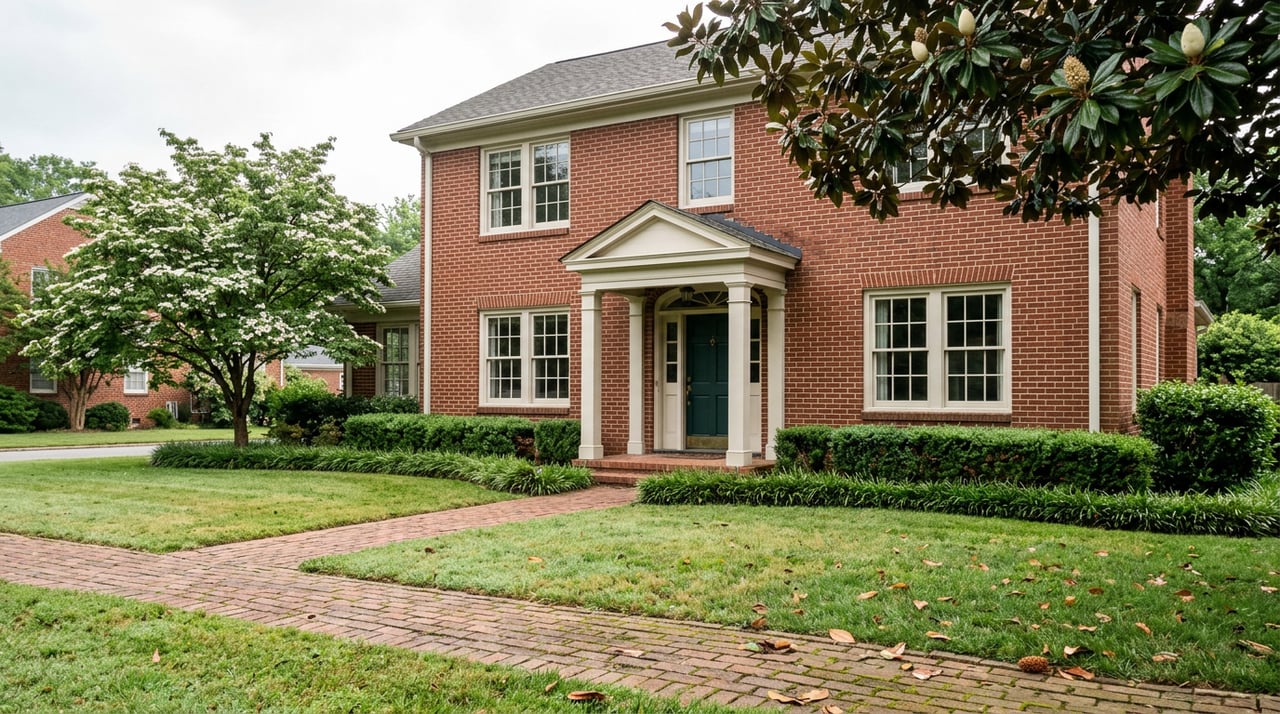
Even inside a single Buckhead-adjacent submarket, the "luxury" label covers a wider range than the $990,000 headline number suggests. Take North Buckhead, the stretch north of West Wieuca Road bounded roughly by Roswell Road and the Chattahoochee River corridor. Per FMLS-sourced data, homes there range from around $600,000 for original ranch and split-level houses built in the 1960s through 1980s that need updating, up to $4 million and above for new construction and fully renovated estates. That's a $3.4 million spread inside one loosely defined pocket, on streets like Wieuca Road, Old Ivy Road, and Lake Forrest Drive, the last of which borders the Blue Heron Nature Preserve.
The price-per-square-foot gap between North Buckhead and Buckhead's most established estate streets runs in the range of 15% to 25%, reflecting differences in lot maturity, house age, and proximity to Buckhead Village retail rather than a difference in school access or municipal services. Both areas fall inside the City of Atlanta and Fulton County. For a relocating buyer, that gap is the difference between a renovation project with long-term upside and a finished product priced at a premium for not requiring one.
This is the second layer of the thesis. The national ranking tells you Atlanta's luxury entry point is low relative to other Top 10 metros. The neighborhood-level data tells you that even within Atlanta, "low relative to peers" still spans a wide range depending on how recently a house has been touched and how close it sits to the corridor everyone already knows.
What this means for how you actually search
None of this means the market is soft at the top. It means the visible market and the actual market are two different datasets, and the gap between them is widest exactly where a relocating buyer with a coastal-market budget is most likely to be shopping. Public search tools capture the properties that needed exposure to sell. They don't capture the roughly one in five deals that closed quietly because the right buyer was already in the pipeline.
If you're arriving with equity from a more expensive market, or you already own here and are weighing a move up into this tier, the practical move is the same either way: get a clear, current number on what you're working with before you start comparing it against a ranking headline built on someone else's numerator.
Frequently asked questions
Does Atlanta's luxury ranking mean home prices are rising across the whole metro? No. The ranking reflects behavior in the top price tier specifically. The broader market, particularly in the sub-$1 million range across much of the North Metro, has shown declining closed sales and a rising share of price-reduced listings through mid-2026.
If a fifth of top sales are off-market, how would I ever find one? Off-market matches typically happen through an agent's direct network rather than public search, which is exactly why working with someone connected to that layer of the market matters more here than it might in a market where inventory sells through listings by default.
Whether you're relocating with a budget shaped by a different metro's math or already own here and are thinking about what your equity could do in this tier, the first step is a real number, not a national headline. Get your instant home valuation from Team Rich Richardson and find out what your next move actually looks like.