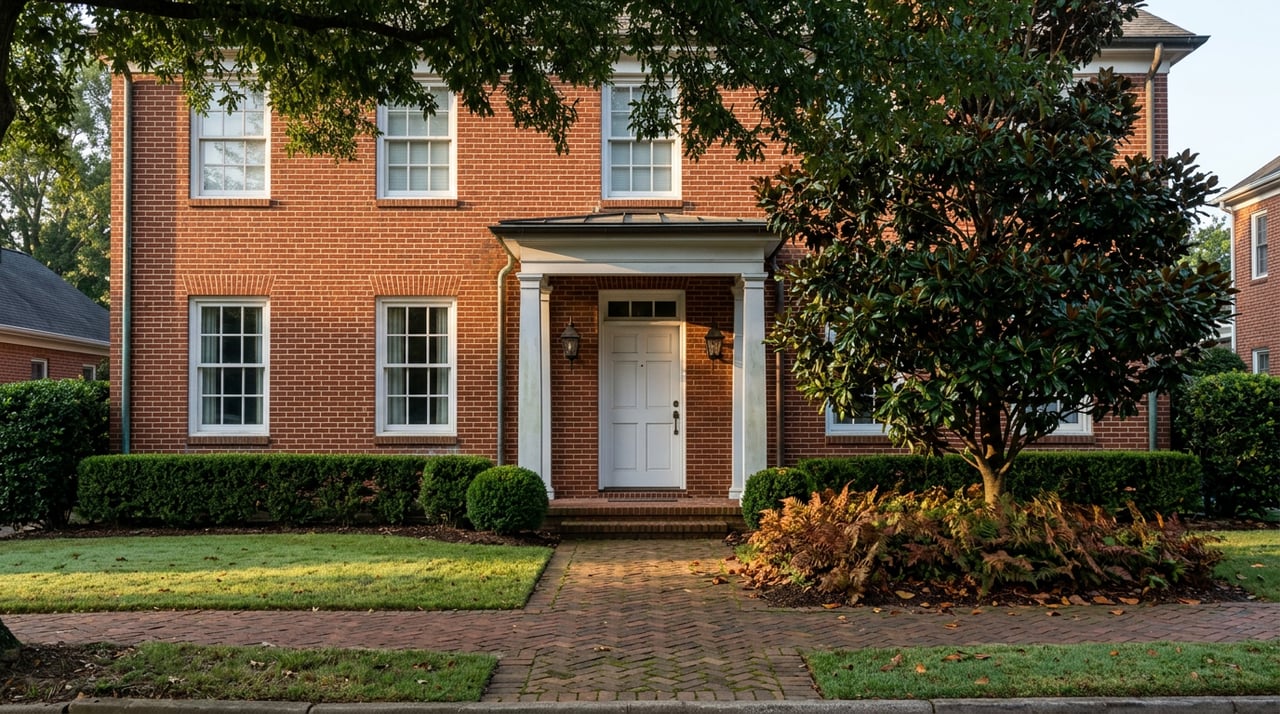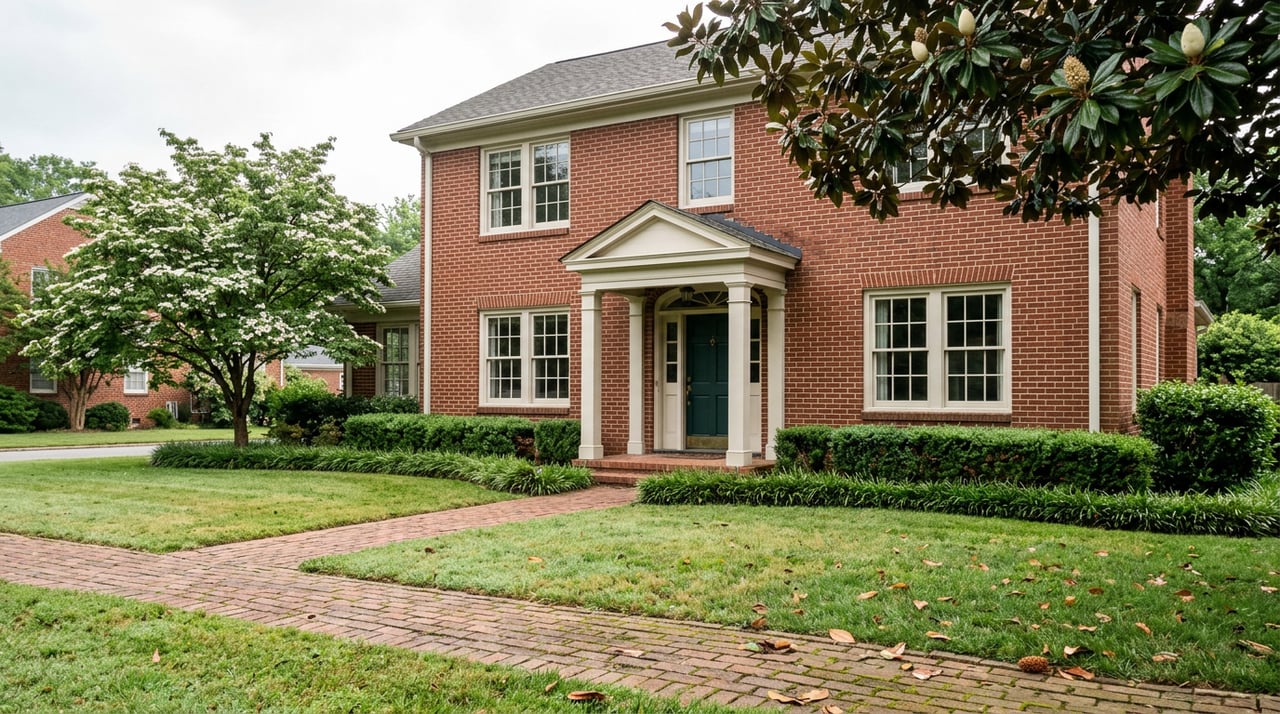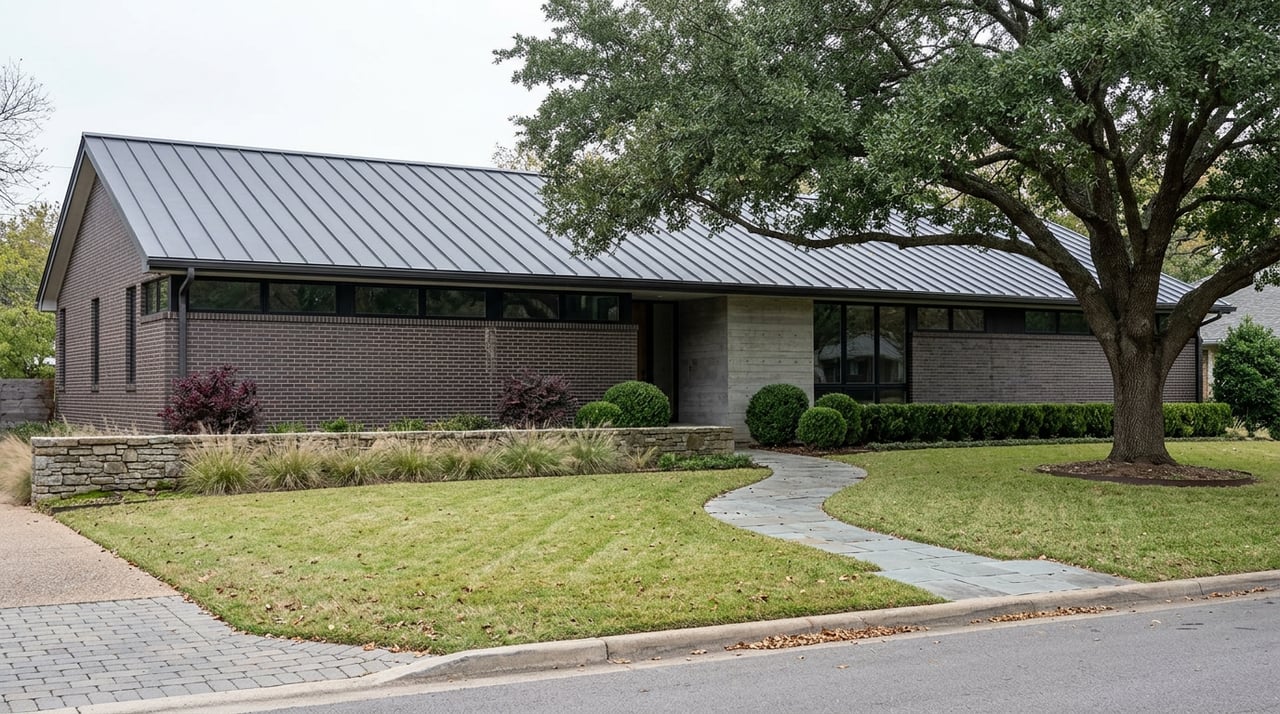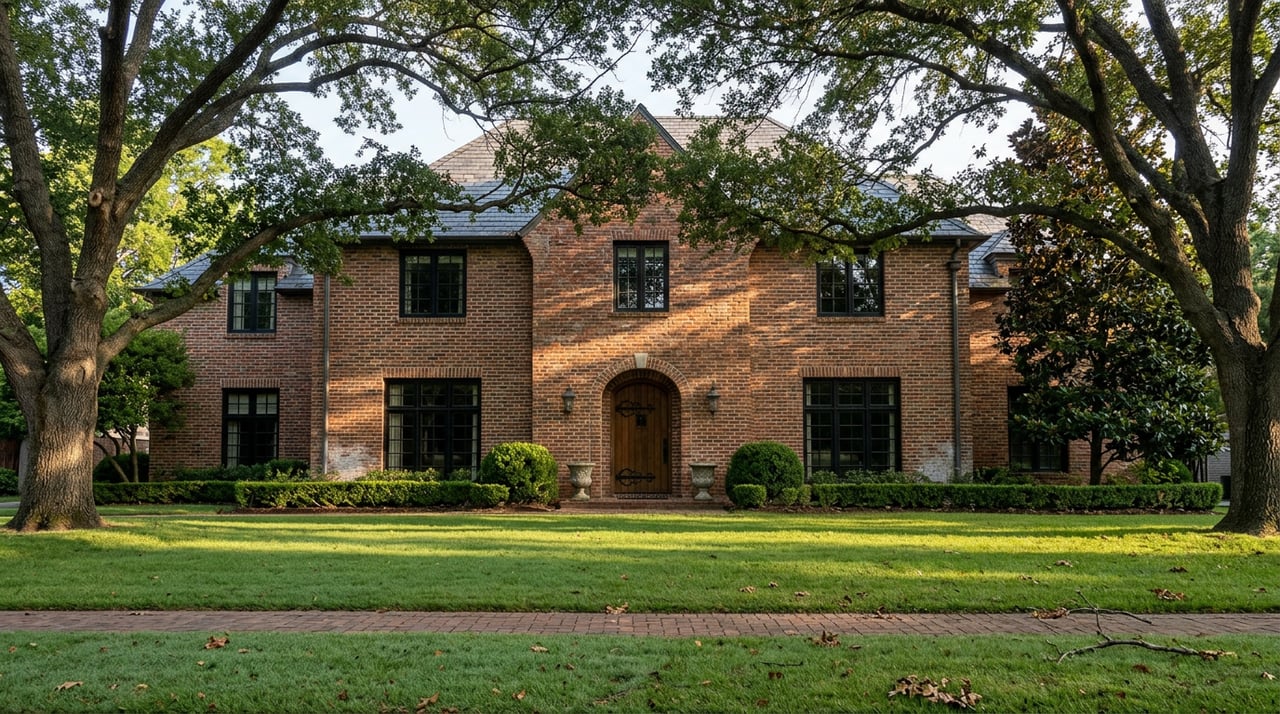
Charlie Sears, a site planner at Land Plus Associates who has worked on some of Tuxedo Park's most closely watched new builds, put a number on it earlier this year: removing a single 20-inch tree without planting a replacement used to cost $700 in city fees. Under the ordinance that took effect January 1, 2026, that same tree now costs $2,800.
Multiply that by the dozen or more mature hardwoods on a typical wooded acre in Tuxedo Park, and you start to see why this is not a footnote for anyone weighing whether to sell an older estate as a teardown, buy a lot to build new, or renovate in place. Eight months into the new rules, the math has changed on exactly the kind of property this neighborhood is known for: large, heavily canopied lots where the value has always depended on what you're allowed to clear.
The Fee Structure That Changed on January 1
Atlanta's Tree Protection Ordinance had not seen a major rewrite since 2001. Under the old rules, removing a tree cost a flat $100 plus $30 per diameter inch of trunk, with the total capped at $10,000 per acre for R-1 and R-2 zoned property and $7,500 per acre for R-2A, R-3, and R-3A. The Atlanta City Council voted unanimously on June 16, 2025 to replace that structure, and the new rates became effective at the start of this year.
Here's the shift in plain numbers:
| Before January 1, 2026 | After January 1, 2026 | |
|---|---|---|
| Recompense per diameter inch | $30 (plus $100 flat fee) | $140 |
| R-1 / R-2 per-acre cap | $10,000 | $35,000 |
| R-2A / R-3 / R-3A per-acre cap | $7,500 | $25,000 |
The city's own release on the ordinance frames the increase as correcting a fee that had not kept pace with what it actually costs to replant urban trees. Whatever the intent, the effect on the ground in a neighborhood built on large wooded lots is straightforward. Clearing a site for new construction now carries a materially higher ceiling than it did twelve months ago.
Why Tuxedo Park Feels This More Than the Rest of Buckhead
Every R-1 and R-2 zoned pocket of Atlanta absorbs this increase, but Tuxedo Park carries a second layer that most of them don't. In 2023, the Atlanta City Council unanimously approved Special Public Interest District 25, a zoning overlay written specifically to protect Tuxedo Park's original 1900s land plan: the deep lots, the tree canopy, and the thoughtful placement of homes that founder Charles Black insisted on when he laid the neighborhood out along West Paces Ferry Road. SPI-25 already constrains how a lot can be subdivided or how closely a new structure can sit to its neighbors.
Stack the citywide tree ordinance on top of that existing overlay and you get a neighborhood where the cost of clearing a lot and the rules governing what you can build on it are both more restrictive than almost anywhere else in Buckhead. The ordinance's broader authority for the city arborist compounds this. Permit approvals now rest more on the arborist's judgment of tree health and placement than on fixed, measurable standards, which means two similar lots on Blackland Road or Valley Road could get different rulings depending on the specific trees involved and how the arborist reads them.
What the New Cap Actually Does to a Real Lot
Numbers matter more when they're attached to an actual property. A Siegel Construction and Castro Design Studio project completed this spring sits on 1.58 private acres at the crown of a Tuxedo Park hilltop, with Land Plus handling the site planning. Using that lot size against the old and new per-acre caps shows the swing clearly:
At the old $10,000 per acre cap, the maximum recompense exposure on 1.58 acres was $15,800.
At the new $35,000 per acre cap, that same lot's maximum exposure is $55,300.
That's a ceiling, not a guaranteed bill. A builder who plants enough replacement trees to earn the ordinance's 1.25-times planting credit can bring the number down substantially, and not every tree on a lot triggers full recompense. But for anyone pricing out a teardown or a major clearing project on an acre-plus Tuxedo Park lot, the range of possible outcomes just moved up by tens of thousands of dollars, and that range now has to be factored into a pro forma before a shovel goes in the ground.
The "New" Premium Just Got a Structural Floor Under It
Tuxedo Park has commanded a premium for new and extensively renovated construction for years. Over the past four years, 13 of the top 40 sales in Buckhead, roughly a third, have landed in this single neighborhood, and five of the most recent top 10 sales were here. Seven of those ten properties were either newly built or extensively renovated. Buyers at that level have been paying for turnkey execution: the vision, the craftsmanship, the convenience of walking into a finished home rather than managing a build.
What changes now is why that premium holds. Before this year, the gap between a dated estate and a new build was mostly about taste, finish level, and the hassle of construction. Now there's a hard cost embedded in the ground itself. Clearing a heavily wooded lot to build new is measurably more expensive than it was in 2025, which means the builders and buyers willing to absorb that cost are self-selecting for the top of the market. That's a structural reason for the new-construction premium to hold or widen, not a stylistic one.
The Permit-First Strategy
If you own an older Tuxedo Park estate on a large wooded lot and you're weighing whether to sell it as-is to a buyer who plans to build new, there's a strategy worth understanding before you list. Going through design and permitting on a placeholder structure before putting the lot on the market can do something a listing description can't: it proves what the site will actually support under the arborist's current, more subjective standards.
That matters because a buyer evaluating an unpermitted lot now has to price in real uncertainty about which trees the arborist will let them remove and at what cost, on top of the higher recompense rates themselves. A seller who has already secured permits removes that uncertainty and can point to a documented, approved plan instead of asking a buyer to take the lot's potential on faith.
What This Means If You're Buying or Selling Right Now
For sellers holding a dated home on a large lot, the calculus has shifted. A lot that hasn't been permitted is harder to sell at the price a fully cleared, buildable site would command, because a buyer now has to underwrite tree-removal costs and arborist risk into their offer. Sellers who invest in permitting ahead of listing are positioning the property closer to its true value rather than leaving that math for the buyer to guess at.
For buyers eyeing new construction, the lesson is to get a firm read on a lot's tree inventory and likely recompense exposure before writing an offer, not after. The days of assuming clearing costs would be a rounding error in a multimillion-dollar build are over. On a wooded acre-plus lot, that line item alone can now run into the tens of thousands of dollars, and it should show up in your budget the same way a foundation or grading estimate does.
A Few Questions Worth Asking Directly
Does the higher recompense rate apply to a renovation that doesn't add square footage? The ordinance's recompense structure is tied to tree removal itself, not to the type of project, so removing a protected tree during a renovation triggers the same fee schedule as removal for new construction.
What about a tree that's already dead or hazardous? The ordinance preserves a separate, faster permit pathway for dead, dying, or hazardous trees that avoids the full recompense fee structure tied to redevelopment, though documentation and a permit are still required.
Will these fees increase again? Starting January 1, 2027, the recompense rate is set to adjust annually based on the Consumer Price Index for the Atlanta-Sandy Springs-Roswell metro area, so the current $140 per diameter inch is the floor, not a fixed number.
If you're sitting on an older Tuxedo Park property and trying to figure out whether permitting before you list makes sense for your specific lot, or you're evaluating a teardown purchase and want a clear-eyed read on what the numbers actually look like, Team Rich Richardson can walk through it with you. Get your instant home valuation and start the conversation with real numbers instead of guesswork.